Low cost LPG leakage detector with buzzer indication using Microcontroller
By DEVANANDA REDDY
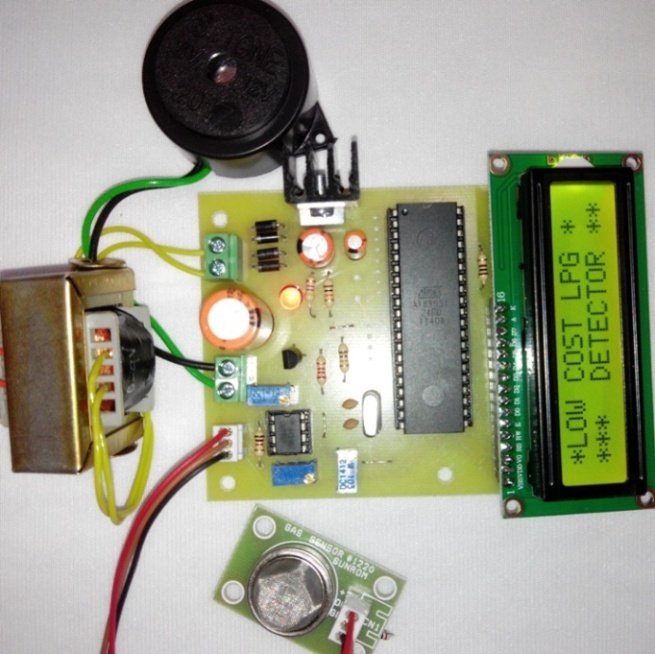
Project Photographs:
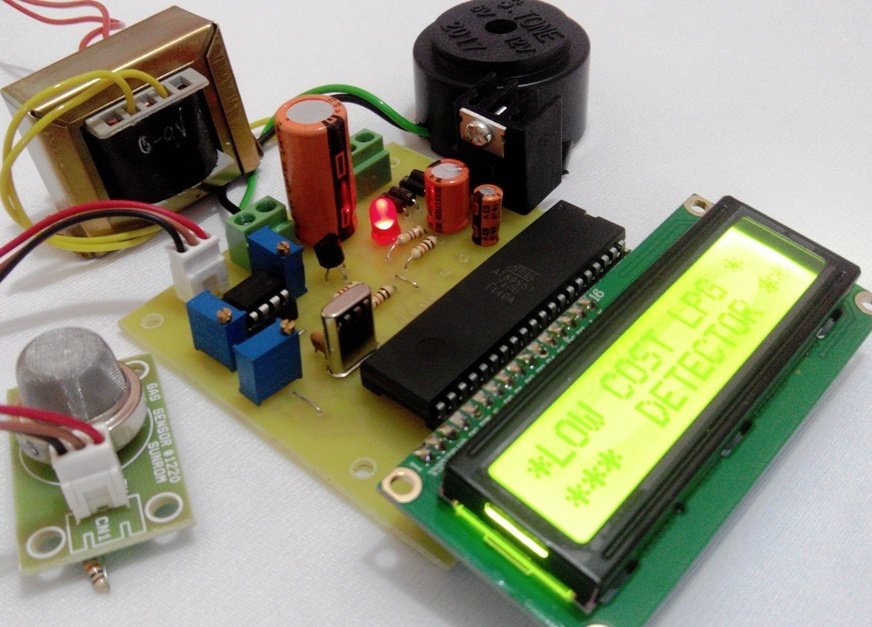
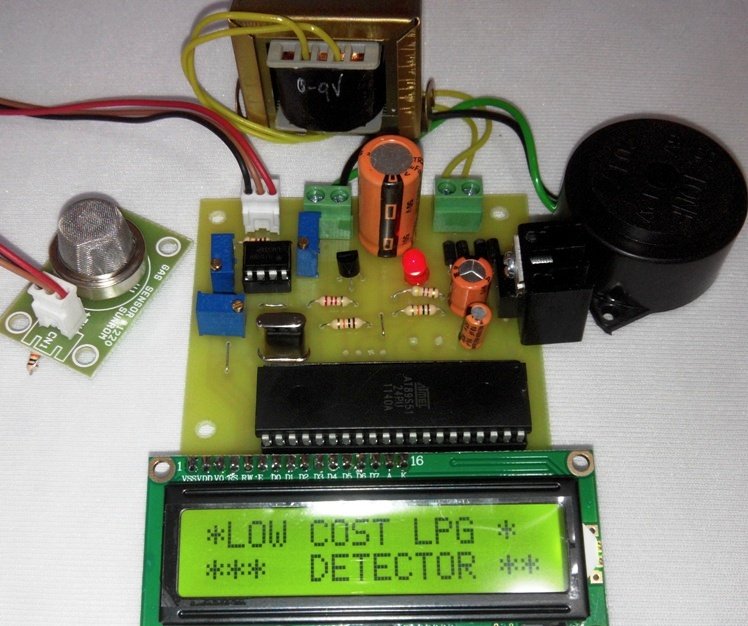
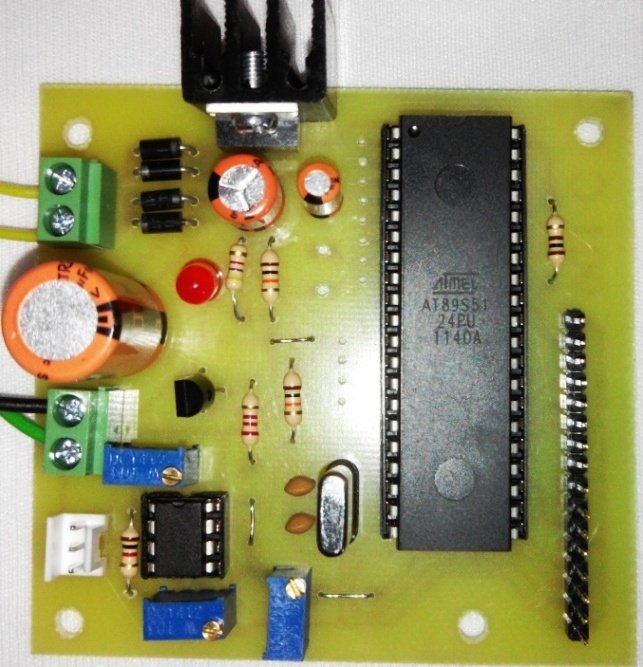
Video of LPG leakage detector with buzzer indication using Microcontroller
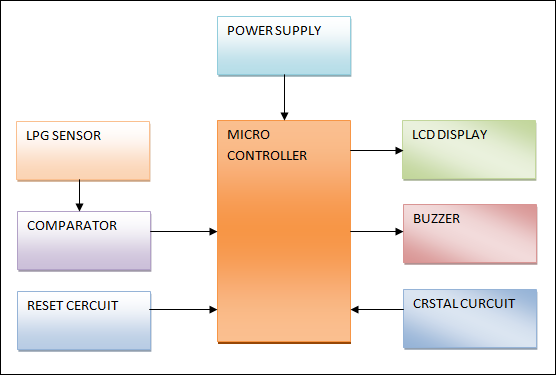
There are various projects based on sensors. And this is a low cost Microcontroller based project. Microcontroller based LPG gas leakage system using MQ6 (LPG Gas) sensor with Buzzer indication has applications in various areas including Industrial application, domestic application. this system is very useful in hotels ,home,car,lpg agencies . This system has advance safety standard and most important this helps prevent accident occurred because of fire. It also useful in protecting human life ,wealth and property . MQ6 (LPG Gas) sensor is used to detect LPG leakage this sensor has quick response time it responding very short period of time. Output of MQ6 sensor is given to Comparator. And output of comparator IC is given to microcontroller 89s51. Liquid crystal display – LCD display shows a message when MQ6 crosses threshold level. And also a Buzzer is turned on to give Alert indication. We have provided a potentiometer which is used to vary the threshold level of comparator which decides the threshold level of leakage condition.
Block Diagram:
Please Note: CD is NOT included in this project. All documents are sent only by email.

You will get following documents through email:
- Project Report in pdf format and in word format ( .doc or .docx )
- Circuit diagram
- PCB layout
- Microcontroller Program in assembly language
- Hex file of the microcontroller code
- Datasheets of all the components / ICs used in the project
- Power point presentation / PPT file
Description in detail:
Various important blocks of system are:
1) Microcontroller
2) LPG Gas sensor
3) Comparator
4) LCD Display
5) Buzzer
6) Power supply
1) Microcontroller
2) LPG Gas sensor
3) Comparator
4) LCD Display
5) Buzzer
6) Power supply
Applications and Advantages:
Applications of Microcontroller based LPG Gas leakage system using MQ6 sensor with Buzzer indication:
1) This project can be used in home and hotel utility(kitchen) area for safety purpose
2) useful in domestic lpg water heater
3) very useful in LPG/CNG fitted car to avoid measure accident .
4) Prevent measure accident in gas agencies (gas station) where multi cylinder stored.
1) This project can be used in home and hotel utility(kitchen) area for safety purpose
2) useful in domestic lpg water heater
3) very useful in LPG/CNG fitted car to avoid measure accident .
4) Prevent measure accident in gas agencies (gas station) where multi cylinder stored.
Hardware specification :
- 89s51 series microcontroller
- Transformer
- Voltage regulator
- Crystal
- Diodes
- Resistance
- Capacitors
- Buzzer
- MQ6 Sensor
- LCD display 16*2
Software specification :
- Assembly language
Advantages of Low cost LPG leakage detector with buzzer indication using Microcontroller:
1) quick reaction from sensor
2) small sensitivity for MQ3 means alcohol sensor give additional feature in the system.
3) high sensitivity of LPG sensor
2) small sensitivity for MQ3 means alcohol sensor give additional feature in the system.
3) high sensitivity of LPG sensor
Comments
Post a Comment